

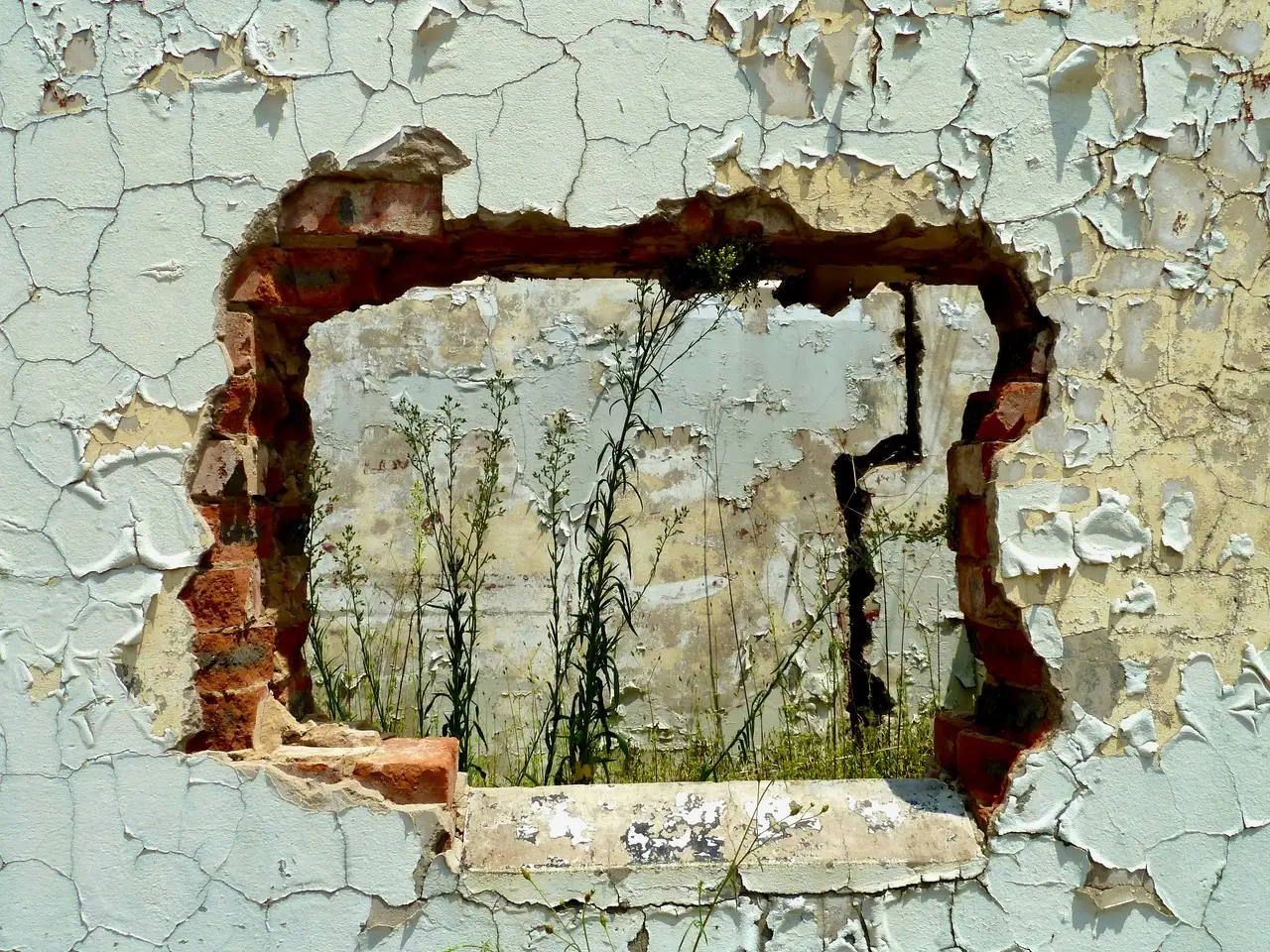
What goes through your mind when you hear of someone “deconstructing” their faith? Just as importantly, what do you feel in your body? Is it something you celebrate? Grieve? Fear? Something that makes you feel out of your depth, or like you don’t even really understand what deconstruction means, let alone why someone would do it—or even whether it’s something that ‘happens’ to someone rather than something they ‘do’?
For my work as a spiritual director, I’ve recently been reading Ian Harber’s helpful new book, Walking Through Deconstruction. In the first chapter, he offers this working definition of deconstruction: “Deconstruction is a crisis of faith that leads to the questioning of core doctrines and untangling of cultural ideologies that settles in a faith that is different from before.”
Everyone’s experience is different, But Harber stresses that deconstruction is a crisis of faith, typically filled with anxiety and grief. Doubts arise; they are not chosen, nor can they be ignored. Deconstruction is “messy, complicated, and deeply personal.” He knows this process from the inside, having personally experienced deconstruction as well as the difficult journey of reconstruction back to a more solid faith in Jesus—richer and deeper, both more secure and more open to mystery than before.
Why is deconstruction happening so much in recent years?
In the first half of the book, Harber discusses some of the traits of our culture, our churches, and ourselves that set us up for deconstruction. He names three broad categories: cultural Christianity, compromised churches, and compounded anxiety. When we mix together churches that opt for religious entertainment over devotion and discipleship, that prioritize partisan politics and the reputation of its leaders over spiritual formation and shepherding, and add onto this a generation of Christians with cumulative anxieties that rise from high expectations rubbing up against numerous hardships, we have a perfect set-up for disillusionment which demands that something shift. And when there’s no non-anxious space in our churches for doubt and discussion and questions, where are people to go?
What do we need to reconstruct?
When we’re disillusioned, what do we need to know, to embrace, to live about God and suffering, discipleship and church and belief, in order to grow into a deeper and truer trust rather than walk away entirely? This is what Harber discusses in the second half of the book.
I’ll say it again: each person’s journey is different. There isn’t a formula to apply or a detailed map to follow. God works in and with each of us in beautifully unique and intimate ways.
And yet there are themes and questions that recur in many peoples’ journeys of deconstruction and reconstruction:
- What do I believe? This is even more scary—and powerful—when asked alongside the courageous question, What false stories might I be believing?
- Does church matter?
- Is there any meaning in suffering? And how do I survive it?
- And, of course, the teeny, weeny question, Who is God and what is God like?
(I’d love to share Harber’s insights into each of these questions, but I’m only writing a blog post here, not rewriting his whole book!)
A different story
I hoped that Walking Through Deconstruction would give me deeper insight into the experience of deconstruction. It did. But I was delighted to find that, in the process, it also reminded me what this life of faith is about. Not just facts and beliefs, but story. And not just hearing or even believing it, but living it.
- Deconstruction involves the painful realization that the story we’ve believed and lived for so long is inadequate.
- Reconstruction involves taking a good, hard look at that story and gradually inhabiting a new story in which our lives are increasingly shaped around God.
As Harber puts it:
“Cultural Christianity tells us the wrong story about reality. . . . That’s why reconstruction isn’t just a matter of affirming the right doctrines as true, but a matter of inhabiting an entirely different story. It’s committing to and orienting your life around an existential map that directs your whole self—heart, soul, mind, strength, and relationships—toward God.” (Ch. 10)
Whether or not we’re experiencing the painful process of deconstruction and reconstruction, isn’t that what we’re all called to—an increased orientation of our whole selves toward God?
Where is God in all this?
I love that Harber ends the book with this reminder:
“So now we move forward in the messiness and brokenness of life. Casting our cares on the Lord, trusting in his goodness, and loving others as we have been loved by him. The Lord cares for his people, searches for those who are lost, and throws parties for them when they come home. His grace is infinitely wide, and his love is immeasurably deep. Nothing escapes God’s notice, and he cares for every person. God isn’t scared of deconstruction. He isn’t scared of doubts or critiques, suffering or cynicism. He is the Lord God almighty, maker of heaven and earth, our rock and our fortress. With him, we will never be shaken.”

Thank you, Carolyn. This post is rich. I appreciate the honest and pastoral tone….both from the author and from you.
Thanks Judy. I’m glad!
Very interesting, never thought of it in this manner. Just had a random discussion on this on the bus of all places with a person who said he was Catholic, just a few days ago. Amazing short conversation. Coming from a background of legalistic Christianity, then no faith and then a baptism at FBC and then another change of thought has been interesting. Who or what do I believe, especially in the light of my struggles with family members and what I consider a white race mentality. Please do forgive. I love the term ” follower of the Way”. I understand that to mean follower of a person called Jesus. How then do so many keep using Old Testament scripture to assume positions of judgements to keep other down and lesser then. Jesus came to take away the curse of the law, He also said ” if you have seen me, you have seen the Father”. How does the world not understand the teachings of Jesus when he said you can only be saved by grace? I remain perplexed in all ways, but will hold on to this merciful Jesus, it is all I can do.
Wow, lots of great questions there, Klara! And none with a few-sentence answer. 🙂 It seems to me there’s a lot of nuance and prayer and careful study needed around these big and very important questions. Just as one example, yes, Jesus “redeemed us from the curse of the law” (Gal 3:3), but he also said, “Do not think I have come to abolish the Law or the Prophets; I have not come to abolish them but to fulfill them. For truly I tell you, until heaven and earth disappear, not the smallest letter, not the least stroke of a pen, will by any means disappear from the Law until everything is accomplished” (Matt 5:17-18). So maybe he didn’t come to remove the law itself, but to free us from the curse of it—ie that we can’t keep the law and so would die if he didn’t keep it perfectly on our behalf? But I also think you’re right that the way Jesus “kept the law” (welcoming and hanging out with people that the religious of his day considered outsiders or even “sinners”) looked a lot different than the way we all too often treat people who are different from us. We sure have a lot to learn from Jesus about how to love well, don’t we?!
Thanks for your thoughtful response, Carolyn. I have read it a few times now and still thinking upon it. The term religious leaves a lot to be desired as at times does the term Christianity., at least for me. I am sure a lot to do with my background and the way I see the world. As you say, we have a lot to learn from Jesus about love and His agape love. I am so saddened by a world that understands love so little, but is so easily swayed to criticize, condemn and or denounce others. Where are mercy, grace, compassion, acceptance and care. I can only say that I am glad that Jesus keeps the law perfectly on our behalf and has freed us from the curse of it. Must admit I hang on to Isaiah 43:4, it is my life line. Thanks again for your blogs, your feedback and your love in writing and sharing with us your thoughts.
Ah, yes, Klara. Isaiah 43:4 is wonderful, isn’t it? And yes, there’s lots for all of us who follow Jesus to grieve about the way the world is, and to pray about. May his Spirit continue to lead us into all truth as well as to grow in us the fruit of the Spirit!
wow, so good!!! I might keep this one!
I’m not sure if I’ve gone through complete deconstruction (you might know better, ha) but certainly have had lots of questions about suffering and what it really means to live out my faith in difficulties, especially difficult relationships, which you have helped me with a lot.
This post is helpful to kind of encourage the process, that even though it’s hard, there’ a better, bigger story. I certainly feel like I try to pass that on when I teach.
Thanks!